
Seasonal guide · Winter · December to February
Winter: protect what you built, and plan what comes next
Nothing grows, but plenty can go wrong. Salt, snow piles, and ice do more damage to a yard than any summer storm.
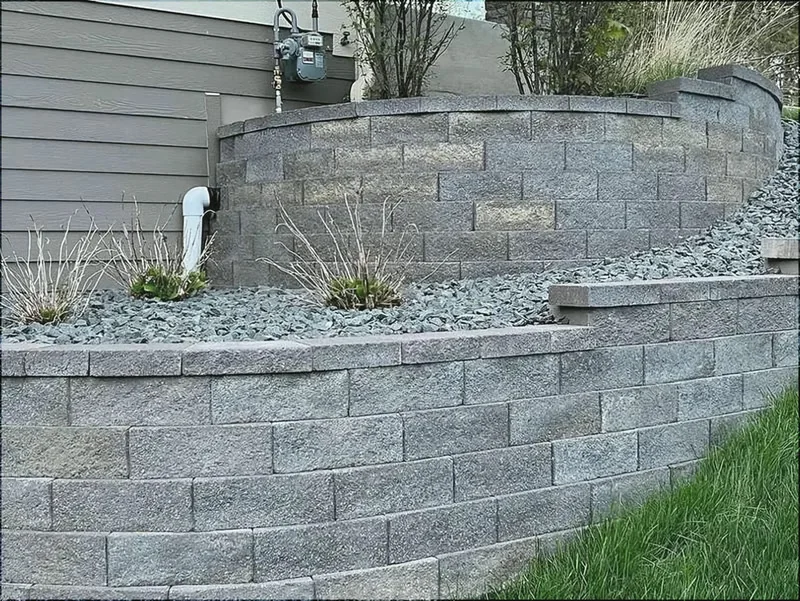
Winter looks like the off season, and for the lawn it is. For pavers, walls, and plantings it's the hardest stretch of the year. Most of the damage we repair in April happened in January: salt eating the surface of a patio, a snowblower blade catching a raised edge, a snow pile crushing shrubs against a wall. A few habits keep all of that from happening. And because nobody is building, winter is the best time to plan, price, and book, before the spring rush.
The short version
- Shovel pavers and stone with a plastic-edged shovel or a snowblower with the skids set high. Metal blades chip edges.
- Use as little salt as you can. Sand for traction, and a paver-safe de-icer (calcium chloride or calcium magnesium acetate) only where you need it.
- Skip rock salt entirely on a patio or walkway in its first winter. The surface is still curing.
- Pile snow on open lawn, not on shrubs, wall tops, or beds. Salted snow from the driveway should go somewhere the meltwater won't run into plants.
- Stay off the frozen lawn. Repeated foot traffic on frozen turf kills the crowns.
- Get your estimate in January or February. Spring slots go first, and materials are easier to order early.
Month by month
December
First real snow. Set up the snow routine before the storm, not during it: where the piles go, which shovel is for the patio, where the de-icer lives. Wrap or fence young trees and shrubs where rabbits and deer browse. If you had drainage problems in the fall, note where ice forms now; it's the same spots, and it tells us where spring grading work is needed.
January
Planning month. This is when we do design work, quotes, and material selection for spring and summer projects. Bring photos of the yard, a rough wish list, and your budget, and we can usually turn around a plan and an estimate within a week or two. Booking now means you pick your dates instead of taking what's left in May. Outside, keep an eye on ice dams and water dripping near the foundation; it points to a grading fix.
February
Mid-winter thaws are the danger. A warm week melts the top layer, then it refreezes at night, and that cycle is what heaves pavers and opens wall joints. Nothing to do except avoid adding salt water to it: when the sidewalk is slushy, sand beats more salt. Order sod, plants, and specialty pavers now for spring delivery. Toward the end of the month, walk the property on a dry day and start a list for the spring walk-around.
Why it matters here
Salt melts ice by pulling water into a brine, and that same brine soaks into concrete pavers and the joints between them, then refreezes and expands. Over a few winters it scales the surface and hollows out joints. It also runs off into the lawn edge and beds, which is why the strip along the driveway comes up brown every spring. Snow piles are the other quiet problem: a few hundred pounds of wet snow leaning on a wall top or a row of shrubs all winter is a load neither was built for. Winter care is mostly about what you don't do. And the planning side is real: our spring and summer calendar fills months ahead, so a January conversation is the difference between a June patio and a September one.
What we can do this season
- Design, estimates, and spring booking
- Material selection and early ordering
- Drainage and grading assessment from ice patterns
- Snow-damage and salt-damage repair in early spring
- Retaining wall inspection once the snow is gone